Creamer is a staple for most American consumers, because drinking coffee black is still relatively uncommon. But with so many creamer brands on the market, it can be paralyzing for consumers to make an informed and healthy choice.
But is coffee creamer bad for you? What common creamer ingredients should health-conscious consumers avoid? And what was our experience testing healthy coffee creamer?
In this article we'll answer all of these questions and more, as we analyze the ingredients in popular coffee creamers to give our take on whether they're bad for you.
We'll highlight creamer ingredients that health-conscious consumers should avoid, and share our honest experience purchasing and testing healthy coffee creamer.
Key takeaways:
- Most commercial creamers contain unhealthy flavoring ingredients
- Healthy coffee creamer options exist
- Look for products with dairy from pastured animals and no added sugar
Why Coffee Creamer is Unhealthy
Most popular coffee creamers are unhealthy in our opinion.
This isn't due to their status as coffee creamers, but due to the ingredients commonly used.
There is nothing inherently unhealthy about coffee creamer, but we consider a creamer that's loaded with questionable ingredients to be unhealthy.
Consider the ingredient list below from Land O' Lakes coffee creamer:
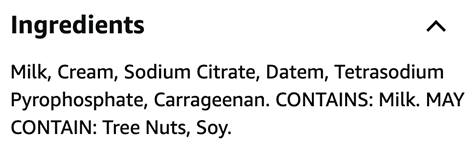
Milk is nutritious, but the brand fails to document whether or not the milk is from pastured animals.
Milk from pasture-raised animals is clinically shown to be nutritionally superior to milk from conventionally-raised animals.
Sodium citrate is the sodium salt of citric acid, and citric acid was shown to cause inflammatory reactions in some individuals in a medical review published in the Toxicology Reports journal.
We haven't come across any clinical evidence that sodium citrate is harmful, but figured this was worth mentioning.
Tetrasodium pyrophosphate is a type of phosphate, and this class of compounds has been associated with negative health effects in at least one medical review, as we discussed in our article on is Coffee mate bad for you.
Carrageenan was shown in a 2001 medical review to disrupt gut function in animals.
Overall, we consider commercial coffee creamer with these filler ingredients to be unhealthy.
We Tested Healthy Coffee Creamer
As the author of this article, I wanted to try a healthy coffee creamer (in this case from Ryze) to share my thoughts.
I don't typically use creamer, and just drink my coffee black:

This creamer had a milder taste; unlike the potent sweetness of brands like Coffee Mate. It was fine and drinkable, but I have a strong preference for the slight bitterness of black coffee, and wouldn't use it again.
While commercial creamers are very unhealthy, it's clear that there are some options on the market which aren't as bad (we'll discuss what to look for in a healthy creamer in a later section of this article).
What Makes Creamer Healthy?
Since we covered ingredients we recommend avoiding in coffee creamer in the first section of this article, we figured it would be useful to explain what criteria we use to qualify a healthy coffee creamer.
1) No questionable additives
We recommend choosing a coffee creamer with primarily whole food ingredients.
This means no carrageenan, no artificial flavors, no synthetic dyes, and so on.
2) Dairy from pastured animals
We discussed previously in this article why we consider dairy products sourced from pastured animals to be a healthier choice than dairy products sourced from conventionally-raised animals.
Look for a creamer brand that uses "grass-fed" or "pastured" milk.
3) No refined sugar
We consider sugar from fruits and whole foods like maple syrup to be healthy in moderation, but we consider refined, added sugar to be unhealthy.
A medical review published in the Nutrients journal concludes that overconsumption of added sugar puts individuals at risk for "poor health outcomes."