ECOS is a laundry detergent brand that's marketed as a healthier alternative to traditional detergent. The brand claims that their detergent is "made without harmful chemicals and nasty ingredients."
But is ECOS really a healthier option than traditional detergent? Does it contain unhealthy additives? Why was the brand sued? And is ECOS better or worse than other "healthy" detergent brands like Blueland?
In this article we'll answer all of these questions and more, as we analyze the ingredients in ECOS Laundry Detergent to give our take on whether it's a safe and effective option.
We'll also explain why the brand was sued, and compare it to other popular "healthy" laundry detergent brands to pick our winners (and losers).
Key takeaways:
- Contains naturally cleansing ingredients
- Contains one inactive ingredient we consider unhealthy
- We do not currently recommend ECOS laundry detergent
Ingredient Analysis
The ingredients in the Free & Clear version of ECOS Laundry Detergent are shown below:
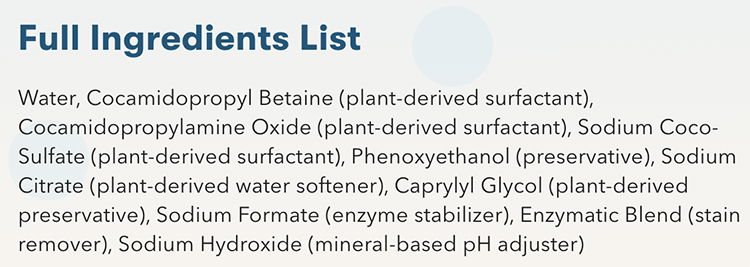
Sodium coco-sulfate is an important cleansing ingredient used in both detergent and soap.
A medical review published in the Journal of Cosmetic Science found this ingredient to be particularly safe and non-toxic because it has low irritation potential and seems unlikely to penetrate through the skin.
Enzymatic blend is used as a stain adjuster, although we'd prefer if the brand clearly listed the specific enzymes used.
As we discussed in our Laundry Sauce reviews article, some enzymes have been clinically shown to be effective detergent ingredients, but without the specific enzymes listed, it's challenging to predict effectiveness.
Phenoxyethanol is the only ingredient we take (minor) issue with, because this synthetic preservative is clinically shown to be toxic to human cells.
It's a good thing that this version of ECOS Laundry Detergent is fragrance-free, because some of the other scents contain fragrance.
For consumers planning to purchase ECOS Laundry Detergent, we recommend the Free & Clear version.
We consider ECOS Laundry Detergent likely to be effective for cleansing clothing and to be a safer choice than commercial detergent.
To explain why, consider the ingredient list below from a popular commercial detergent brand:
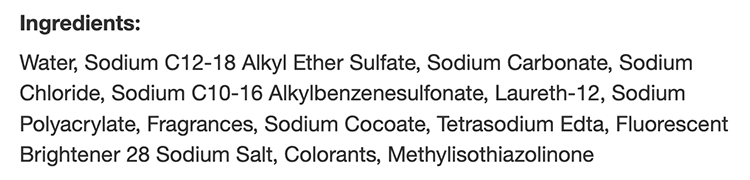
Fragrances suggests multiple fragrance ingredients, and a 2016 medical review suggests that fragranced consumer products pose serious health risks.
Methylisothiazolinone is a synthetic preservative and its use is strictly controlled by Health Canada due to "potential safety issues," as we discussed in our review of Tru Earth Laundry Strips.
Colorants fails to identify the specific chemical compounds used, and synthetic blue dye (used in many laundry detergents) may have "toxic effects" in humans according to a medical review published in the Advances in Nutrition journal.
Are ECOS Sheets Better?
To this point in the article we've analyzed ECOS Liquid Laundry Detergent, but the brand also sells laundry detergent sheets, which is a growing trend in the laundry detergent industry.
The ingredients in ECOS Free & Clear Laundry Detergent Sheets are shown below:

This formulation is slightly different from the liquid detergent formulation.
Saponins are plant-derived and have an antibacterial effect according to a 2012 clinical trial.
Glycerin is clinically shown to naturally improve scent.
Phenoxyethanol is included, but overall we consider ECOS Laundry Sheets to be a superior option to ECOS Liquid Detergent because we're able to identify two research-backed active ingredients in the laundry sheets.
Why Was ECOS Sued?
In 2022, ECOS was sued in a class-action lawsuit which alleged that their products contained harmful ingredients while being marketed as "non-toxic."
According to Classaction.org, the plaintiffs allege that ECOS' marketing is false and misleading, and that the following ingredients are "toxic" and "dangerous": phenoxyethanol, methylisothiazolinone, cocamidopropyl betaine, and lauramine oxide.
We disagree that cocamidopropyl betaine is dangerous, but we share concerns about the other three listed ingredients.
At the time of publishing this article, we're unable to find any information about whether this lawsuit is ongoing or if it has been settled.
ECOS vs. Popular "Healthy" Detergents
Here's how ECOS compares to other popular detergent brands in terms of healthiness, in our opinion:
Blueland
Contains naturally-derived enzymes which are clinically shown to be effective stain-removers.
Plastic-free, which is better for the environment and reduces the risk of microplastic contamination.
Winner: Blueland
Clean People
The fragrance-free version of this brand's laundry sheets is one of the healthiest detergent formulations we've reviewed to date on Illuminate Health, as we documented in our Clean People Laundry Sheets reviews article.
Winner: Clean People
Earth Breeze
Offers a fragrance-free version which is healthier than any ECOS formulations we've reviewed.
Winner: Earth Breeze
ECOS Laundry Detergent Pros and Cons
Pros:
- Healthier than commercial detergent
- Should be effective for cleaning clothes
- Offers fragrance-free options
- Mostly positive online customer reviews
- Offers sheets which may be more environmentally-friendly
- Should be good for sensitive skin
Cons:
- Contains phenoxyethanol
- Some formulations contain other questionable additives
- Brand was sued over alleged false advertising