Blue Lizard is an Australian sunscreen brand that has won several awards from beauty brands like Allure. The company claims to “make safer sunscreens for you and the environment,” and to be the number one pediatrician recommended mineral-based sunscreen brand.
But does Blue Lizard contain research-backed ingredients for natural sun protection? Does it contain any unhealthy ingredients? What was our Product Tester's honest experience trying Blue Lizard Sunscreen for a month? And why was Blue Lizard sued over its health claims?
In this article we’ll answer all of these questions and more, as we analyze the ingredients in Blue Lizard sunscreen to give our take on whether or not the brand is likely to be effective at protecting skin from the sun, and whether or not it’s healthy.
We'll also feature our Product Tester's experience trying it, explain why the brand was sued, and compare Blue Lizard sunscreen to other popular sunscreen brands like EltaMD to pick our winners (and losers).
Key takeaways:
- Safe, mineral active ingredients for sun blocking
- Contains three inactive ingredients we consider unhealthy
- We do not currently recommend Blue Lizard Sunscreen
Ingredient Analysis
The active ingredients in Blue Lizard Mineral Sensitive Mineral Sunscreen (which is the Allure award winner) are shown below:
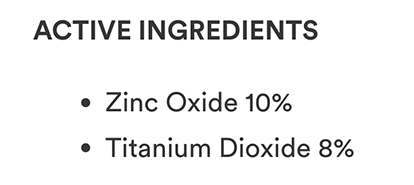
Zinc oxide and titanium dioxide are physical sunscreen ingredients, and have been shown in a medical review published in the Journal of Cosmetic Science to be highly effective at protecting skin from UV damage, and to have excellent safety profiles.
We consider both of these active ingredients to be healthier options than some chemical sunscreen ingredients that can be hormone-disrupting.
The inactive ingredients in this formulation are shown below:
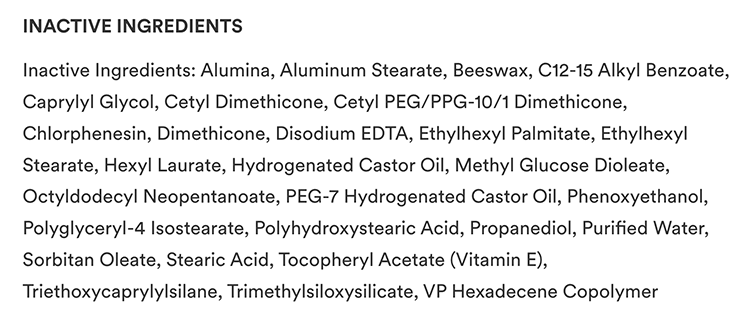
There are some inactive ingredients clinically shown to improve skin quality.
Hydrogenated castor oil is clinically shown to have natural exfoliating effects, as we documented in our review of Ogee Makeup.
Beeswax was shown in a 2016 medical review to have antimicrobial activity, suggesting it may have an anti-acne effect.
However, while there are both effective active and inactive ingredients in this formulation, there are also some inactive ingredients that may be questionable from a health perspective.
Chlorphenesin is a synthetic preservative shown to be toxic to human cells in a 2020 clinical trial.
Phenoxyethanol is another synthetic preservative shown to be toxic in the same trial.
Alumina nanoparticles were shown to be toxic to living organs in an animal study published in the Nanoparticles journal. It’s unclear whether the alumina in Blue Lizard sunscreen is in the form of nanoparticles or larger particles.
Overall, we consider Blue Lizard Sensitive Mineral Sunscreen likely to protect the skin from the sun due to its effective active ingredients.
We think this is a healthier sunscreen option than most commercial sunscreens that use chemical active ingredients that can be hormone-disrupting in some cases.
However, we don’t currently recommend this product due to the inactive ingredients highlighted above.
We Tested Blue Lizard Sunscreen
One of our product testers named Jodie Steinberg tried Blue Lizard sunscreen. Here's her experience:

The product was very easy to use with a standard squeeze tube. I had no issues with it.
This sunscreen didn't have any noticeable scent.
This is an excellent mineral sunscreen in my opinion. Like most mineral sunscreens, it is very white and a little thick at first, but it absorbs easily and quickly into the skin. It did not stick to my eyebrows or form an easy to feel film on my face or neck.
It did not settle into fine lines and did not make my skin look greasy or too matte. It wore well throughout the day and did not leave a white cast. Here's an image of how it blended in on my face:

Overall, I'd rate Blue Lizard Sunscreen 9.5/10, and I plan on purchasing this product again.
Why Was Blue Lizard Sued?
A class-action lawsuit was filed against Blue Lizard in 2021 that alleged the company was falsely advertising their products.
The brand was marketing their products as "mineral-based," but those same products contained active ingredients that were chemical sunscreen ingredients, according to ClassAction.org.
The plaintiffs alleged that a product marketed as "mineral-based" should be entirely free of active ingredients that are chemical sunscreen ingredients.
However, the lawsuit was dismissed.
It seems that either the lawsuit was based on false grounds, or the company has updated their formulations, because the sunscreen product we analyzed in this article is entirely free of active chemical sunscreen ingredients.
We don't believe this lawsuit is something prospective consumers need to worry about.
Blue Lizard Sunscreen vs. Popular Sunscreens
Here's how Blue Lizard sunscreen compares to other popular sunscreens in terms of potential effectiveness and healthiness, in our opinion:
EltaMD
Contains a "chemical" sunscreen ingredient which is clinically shown to have "adverse health risks" in humans, and to be harmful to the environment.
While we take issue with some of Blue Lizard's inactive ingredients, we consider the brand's active ingredients to be a much safer choice.
Winner: Blue Lizard Sunscreen
Sky and Sol
The stated ingredients list is entirely free of any ingredients we consider unhealthy, as we documented in our Sky and Sol reviews article.
One influencer claims that this sunscreen is mislabeled, but until that has been proven, we consider it to be a better choice than Blue Lizard.
Winner: Sky and Sol
Supergoop
Contains both active and inactive ingredients that we consider unhealthy.
Winner: Blue Lizard Sunscreen
Dermatologist Debunks Sunscreen Myths
A YouTube video from the popular "Mixed Makeup" channel features a dermatologist debunking popular sunscreen myths.
The video has over 45,000 views and answers interesting questions like whether sunscreen should be worn on cloudy days:
Blue Lizard Sunscreen Pros and Cons
Pros:
- Should protect skin from sun
- Non-toxic active ingredients
- Affordable
- Positive online customer reviews
- Contains some research-backed inactive ingredients
Cons:
- Contains two preservatives that may be unhealthy
- Contains alumina